Kitchen Organization
Small Kitchen Organization Checklist: 7 Space-Saving Essentials
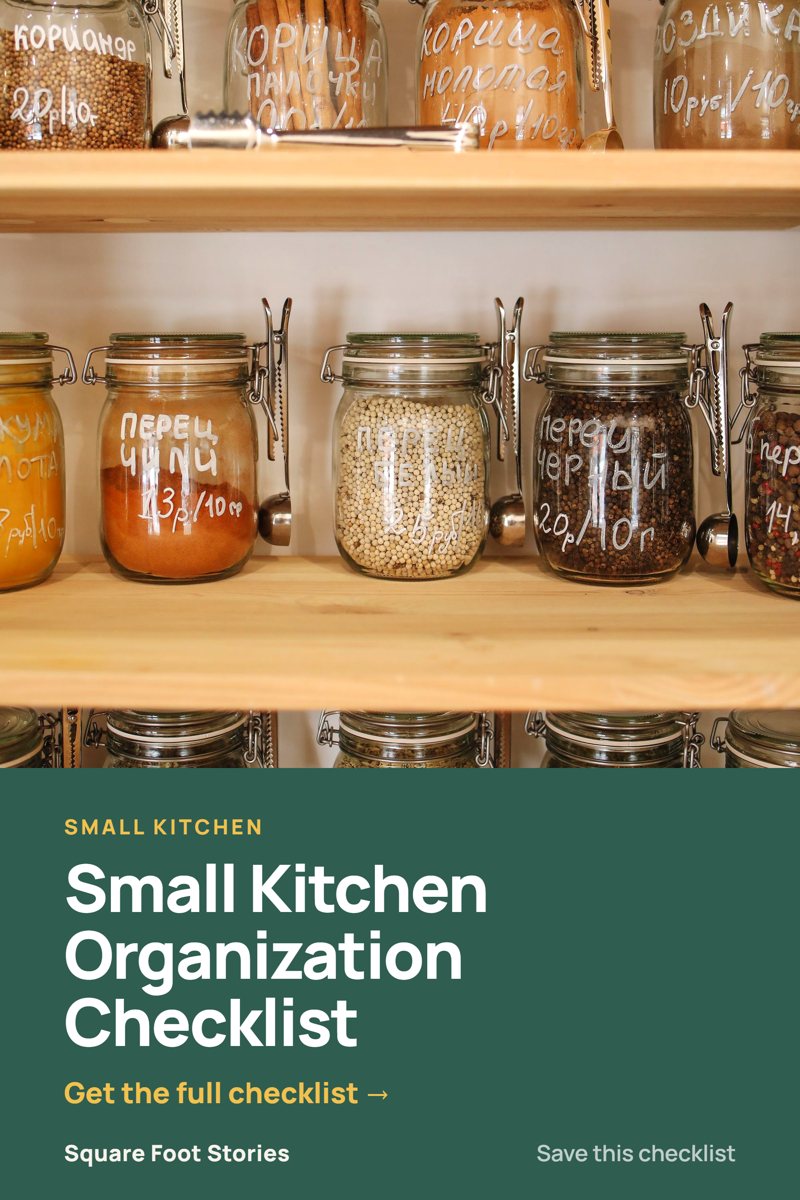
Small kitchens waste the same three places: walls, cabinet doors and the empty height inside cabinets. This checklist puts each of them to work, mostly without tools.
 Save to Pinterest
Magnetic knife strip
Frees a drawer or the counter space a knife block takes, and keeps knives within reach.
Over-sink cutting board
A board that spans the sink gives you extra prep space exactly where you rinse and chop.
Tiered shelves in cabinets
Step shelves or wire risers double the usable space inside tall cabinets so cans and jars stop hiding behind each other.
Pegboard for pans
A pegboard on a free wall holds pans, lids and utensils in plain sight and frees deep cabinets.
Door-mounted spice rack
Slim racks on the inside of a cabinet or pantry door turn dead space into spice storage.
Rolling cart for extras
A narrow cart slides between the fridge and the wall or next to the counter, and moves to wherever you need it.
Clear pantry bins
Group snacks, baking supplies and pasta in clear bins so you see what you have and stop buying duplicates.
What to look for before you buy
Magnetic knife strips
Check the strip length for your knives and that it can be mounted securely on your wall type.
Cabinet shelf risers
Measure the cabinet width, depth and height. Expandable risers fit more cabinets.
Rolling carts
Measure the gap where the cart will live and look for locking wheels.
Common mistakes to avoid
- Buying organizers before measuring cabinets.
- Keeping rarely used gadgets in prime spots.
- Overloading wall-mounted rails beyond their rating.
Questions people ask
How do I organize a small kitchen with no pantry?
Use cabinet risers, door-mounted racks and one shelf or cart as a mini pantry for dry goods.
What should go on the counter in a small kitchen?
Only things you use every day. Everything else goes in cabinets, on the walls or on a cart.
Empty one cabinet at a time, keep only what you use, then add organizers to what's left.